



The cross-border project LAKES GO DIGITAL is progressing at full speed, and we’re excited to share an important milestone: smart buoy locations have now been confirmed in three lakes.
In total, the project will install smart buoys in six lakes — four in Latvia and two in Lithuania. These devices will continuously monitor key water parameters, helping scientists and local communities better understand lake ecosystems and respond faster to changes in water quality.
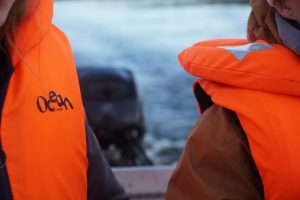
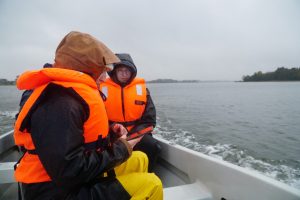
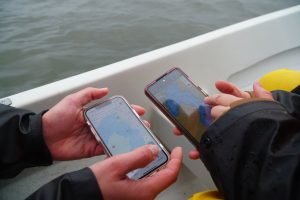
During a two-day field visit, researchers from the Latvian Institute of Aquatic Ecology, together with municipal representatives, visited the pilot lakes to identify the most suitable buoy installation points. The goal was to find locations that meet both scientific and practical requirements – including depth, safety, accessibility and mobile network coverage.
Day 1: Lithuania – Two Lakes, Two Completely Different Worlds
The first day took the team to Lake Germantas and Lake Mastis in Lithuania’s Telšiai region. While both lakes are geographically close, they represent two very different environments.
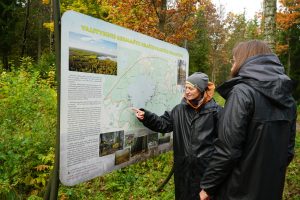
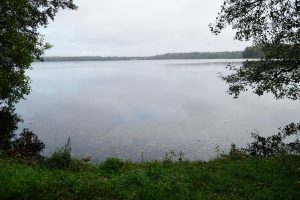
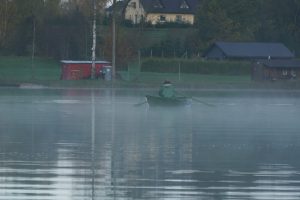
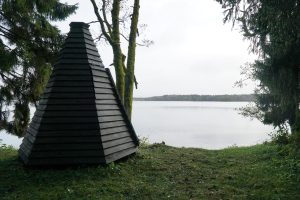
Lake Germantas is a quiet, forest-fringed lake surrounded by protected natural landscapes. A well-developed educational trail runs along the shore, offering nature stations, outdoor installations, picnic areas, and scenic viewpoints. Scientifically, Germantas is particularly valuable because it offers a rare opportunity to observe a lake with intentionally low human pressure. Motorized boats are restricted, biodiversity is high, and the reserve supports a wide range of bird species, plants, fungi, and lichens — including species protected at national and European levels.
However, Germantas also presented one of the biggest technical challenges: digital infrastructure. Finding a stable internet connection for the smart buoy proved difficult, turning network coverage into a key factor in the final placement decision.
Just a short distance away, Lake Mastis showed a completely different picture. This is a moderately sized, shallow lake located right in the city of Telšiai – a lake that shapes both nature and daily urban life. It offers walking and biking paths, water recreation, and public swimming areas, and it plays a visible role in the city’s cultural identity.
Because Mastis is shallow, it can respond rapidly to changes in temperature, nutrients, and disturbance. In such lakes, algal blooms can develop quickly, oxygen levels can shift dramatically, and water quality can change within days. That’s exactly why monitoring matters: for an urban lake, water quality directly affects whether people can swim, boat, or safely enjoy the lake they live beside.
In Mastis, smart buoys will act as an early-warning system, helping detect changes before they become visible problems.
Day 2: Latvia – Golden Autumn at Lake Ciecere
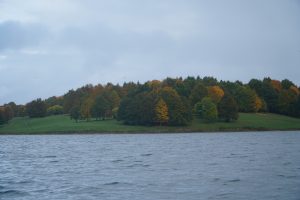
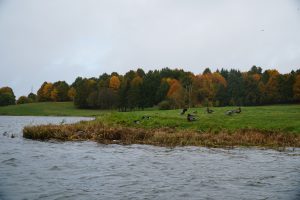
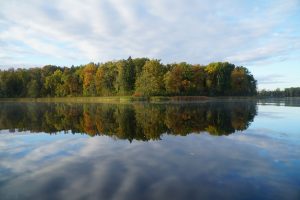
On the second day, the team visited Lake Ciecere in Latvia. The lake is long and narrow, sometimes resembling a river, which made the location selection more complex. It is also a popular destination for recreation and sports, meaning buoy placement needed to account not only for scientific value but also for safety and minimal disruption to lake users.
Even with these challenges, the team evaluated all necessary parameters and confirmed the installation sites.
Next Step: Three More Lakes Ahead
This field visit marks an important step toward full deployment – but the work continues. In two weeks, the project team will visit three more lakes to select the remaining buoy locations.
Follow the LAKES GO DIGITAL project to stay updated as we move closer to installing a modern monitoring system that supports healthier lakes, smarter decisions, and better protection of freshwater ecosystems across borders.